- by Ashleigh Panoo
Zaentz Fellow Spotlight: Ziyan (Miranda) Xin
“After graduation, I plan to return to China and continue working in early childhood education, remaining closely connected to classrooms and working directly with children, families, and teachers.”
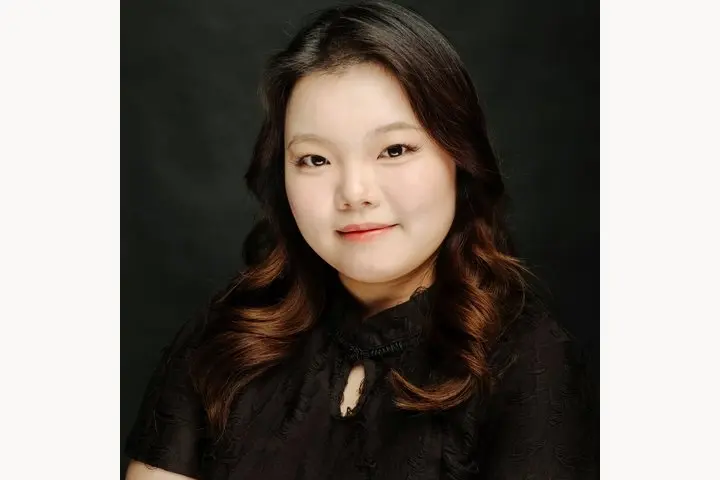
Ziyan (Miranda) Xin, ’26 MA, is one of the first graduates of the Zaentz Fellows Program at the Stanford Graduate School of Education. The tuition-free program offers students the opportunity to deepen their knowledge of early childhood content, engage with the Stanford Center on Early Childhood, and build connections and community with professionals while earning their master’s degree. Xin graduates this summer with her degree in International Education Policy Analysis (IEPA), and plans to return to her home in China and continue working with children, families and teachers.
She says her experiences working with children have shown her that development is shaped not only by educational environments, but by a child’s family, culture, community and social contexts.
In this Q&A, Xin reflects on supporting community-led research in Michigan, and how she wants to use her new skills to create learning experiences that can be adapted to different cultures.
What was a meaningful experience to you as a Zaentz Fellow?
One of the most meaningful parts of being a Zaentz Fellow was becoming part of the broader early childhood community. Through site visits to child care centers and conversations with researchers, practitioners, community leaders, and policymakers, I had the opportunity to experience the field from many different perspectives. Visiting classrooms deepened my understanding of how each center created a nurturing environment for children, and I was especially impressed by the strong connections between teachers, children, and families, and how thoughtfully designed environments supported children’s development. Most importantly, I am grateful for the relationships I built throughout the fellowship with scholars, practitioners, and advocates who are deeply committed to advancing early childhood education. These experiences and connections will continue to shape my work with young children and families long after graduation.
What is something you’ve accomplished in the fellowship that you are proud of?
A highlight of my fellowship experience was contributing to a community-engaged research project in Kent County, Michigan, in partnership with First Steps Kent. Working closely with community organizations, my team conducted desk research, interviewed local stakeholders, and created public-facing infographics on topics such as housing instability, early care and education, and maternal and child health to make research more accessible to practitioners, policymakers, and families. Throughout the project, I learned that meaningful research is not simply about collecting data; it is about listening carefully, building reciprocal relationships, and translating evidence into practical resources that communities can use. This experience challenged me to think beyond academic research and consider how research can inform practice in ways that are both rigorous and responsive to community needs. It reinforced my commitment to conducting research that not only generates knowledge, but also has a meaningful impact on children, families, and communities.
What’s next for you after graduation?
After graduation, I plan to return to China and continue working in early childhood education, remaining closely connected to classrooms and working directly with children, families, and teachers. My goal is to work at the intersection of teaching and curriculum design, creating high-quality, developmentally appropriate learning experiences that can be adapted across different cultural contexts. At the same time, I hope to use research to strengthen my practice and deepen my understanding of the evolving needs of children and families. In the long term, I hope to pursue doctoral study, examining the broader landscape of childcare policy and systems. Above all, I want to keep learning from children, families, and educators throughout my career while continuing to build the collaborative relationships that inspired me as a Zaentz Fellow.
Read Xin’s thesis, “Something Is Better Than Nothing:” Families’ Perceptions and Experiences of China’s 2025 National Childcare Subsidy Policy