- by Monica Arpino
Early Childhood Policy Academy brings together bipartisan elected officials
The academy is designed to highlight the importance of the earliest years as a public investment.
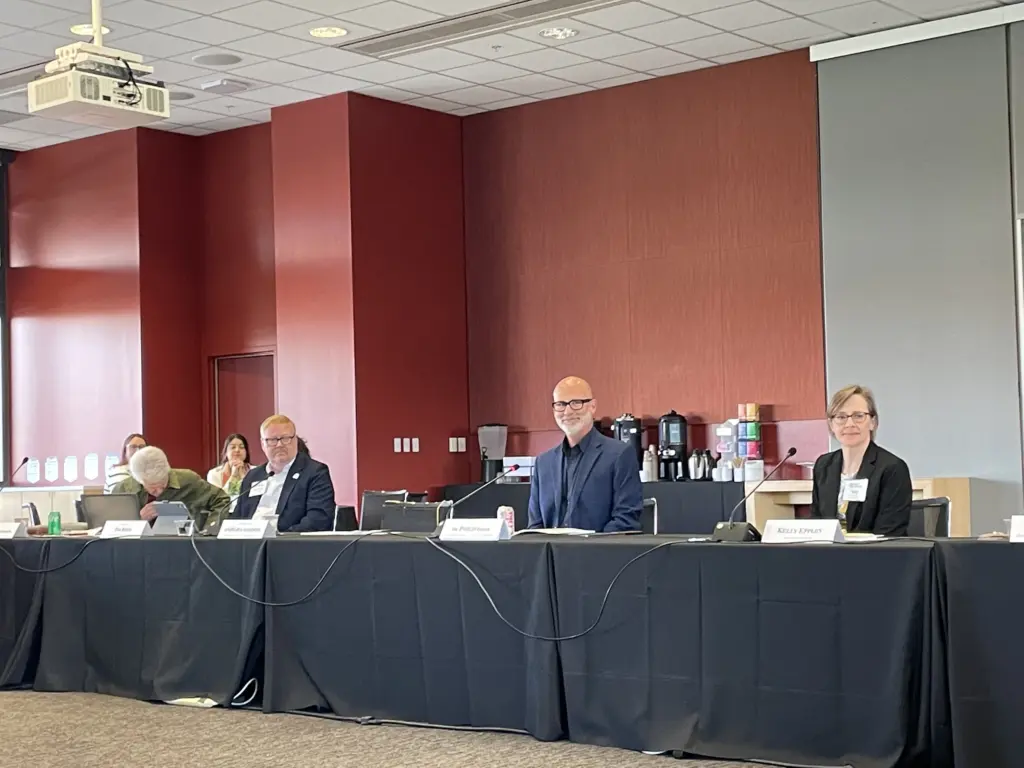
Earlier this week, the Stanford Center on Early Childhood—an initiative of the Stanford Accelerator for Learning—co-hosted the 2025 Early Childhood Policy Academy in partnership with The Hunt Institute and the Saul Zaentz Charitable Foundation. Now in its third year at Stanford, the three-day event brought together a bipartisan group of elected officials and policy leaders from across the country to explore how public policy can better support young children, their families, and the early childhood workforce.
Designed to highlight the importance of the earliest years as a public investment, the program featured expert-led sessions aimed at informing and empowering leaders to support and strengthen early care and education systems in their home states and communities.
Philip Fisher, Director of the Stanford Center on Early Childhood, led a panel on the science of brain development, focusing on the role of early experiences and the environmental and genetic factors that shape a child’s development. The discussion examined how child care, healthcare, economic development, and family support systems are deeply interconnected, and explored the implications of caregiving relationships in supporting young children’s healthy development.
“The well-being of the child is very much connected to the well-being of the adults around them. We need to take the whole family context of the child into consideration,” Fisher said. “One of the things that’s really critical in this equation is—especially in the earliest years of life—so much that will set the stage for children’s ability to be successful in the long run is what happens in the context of their early relationships.”
Fisher emphasized that children’s well-being is closely tied to the well-being of the adults in their lives, highlighting the importance of supporting caregivers to meet basic needs. In the context of ongoing uncertainty and instability facing many families, especially those with young children, the ability to provide predictable, supportive environments becomes even more critical. Ensuring families have the resources and support they need creates the conditions to build these nurturing caregiving relationships.
“You’re building a foundation. At the basis, the relationships, consistency, and predictability are really what makes as big a difference as anything,” Fisher said. “If there can be consistency and predictability in the lives of children amidst all the circumstances we’re seeing, the more likely we’ll see each and every child thriving.”