- by Stanford Center on Early Childhood
Judy Koch: Bringing Books to Children with Love and Joy
While Bring Me a Book will no longer operate as a nonprofit, its legacy and impact will live on through the Stanford Center on Early Childhood.
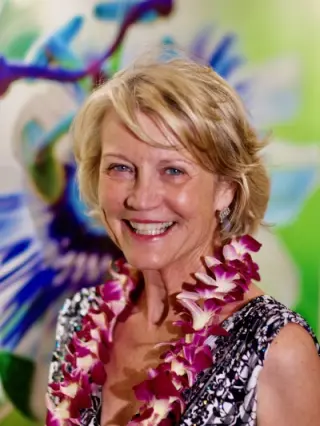
“Live life with purpose!” Judy Koch was fond of saying—and that she did, most notably with the founding of nonprofit Bring Me a Book in 1997. Judy’s mission was to help all children grow a joyful and sustainable reading habit.
Judy’s life of purpose was driven by her unique kindness, generosity of spirit, and joie de vivre. She made every day an adventure, shaped by her desire to live life to the fullest and her commitment to make life better for others.
Judy’s life mission was to spread joyful literacy. It emerged during her first career as a junior high school English teacher and deepened in her second career as the owner and CEO of RSP Manufacturing, a precision sheet metal fabrication company that served Silicon Valley tech companies.
In the RSP factory, she created a model of “workplace literacy” by building a library of exquisite children’s books for her employees, primarily recent immigrants from Mexico, to bring home to their children. After she sold the business, this model expanded to become Bring Me a Book.
Inspired by the words of poet and author Walter de la Mare: “I know well that only the rarest kind of best in anything can be good enough for the young,” Judy curated an exemplary book collection for young children from birth to age five.
Judy understood—through her close observations of children over the years—which books they loved best and wanted to hear read aloud again and again. The Bring Me Book legacy collections are known as “Read It Again!” books. They never fail to delight those fortunate children who, with their families, read the books again and again.
Judy never tired of seeing a child’s face light up with the joy of reading. She gave her heart to the literacy lives of children, lighting their lives and ours with her enthusiasm.
While Bring Me a Book will no longer exist as a nonprofit, Judy’s legacy of work and impact in the community will live on through new and deepening efforts from the Stanford Center on Early Childhood (SCEC). Knowing the critical importance of sharing books with children from the moment of birth, Judy promoted the idea of a collaboration with the SCEC as a way to extend and deepen the work she had initiated three decades earlier.
Now, thanks to generous support from BMAB and the Koch family, SCEC faculty in the School of Medicine’s Department of Pediatrics will apply learnings from BMAB to enrich SCEC’s community-based programs and create a model system of support for families with young children, from infancy through the transition to primary school in San Mateo County. Through this program, children and their families will receive books throughout early childhood, along with guidance on how to encourage young children’s engagement with books and skills in reading.
Donations in Judy’s honor can be made to the Stanford Center on Early Childhood Literacy Program. Learn more about early literacy at Stanford Medicine’s Office of Child Health Equity.