- by Ashleigh Panoo
Stanford professor saw disparity in the classroom. Now she studies how society shapes kids’ brains
Monica Ellwood-Lowe is the founder and director of the new Minds, Experiences, and Language (MEL) Lab at Stanford.
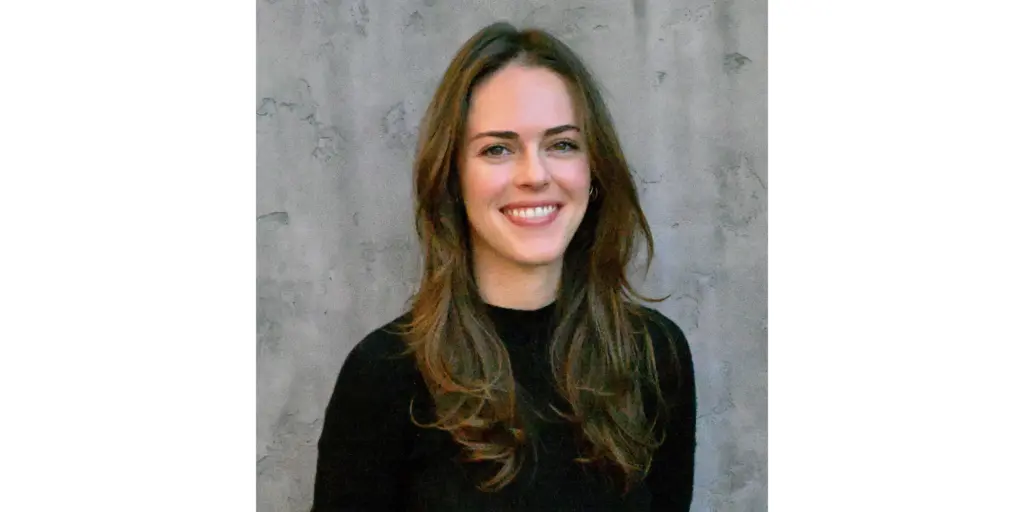
Monica Ellwood-Lowe, Ph.D, studies how the structure of society shapes caregiving and early child development. As the founder and director of the new Minds, Experiences, and Language (MEL) Lab at Stanford, she seeks to answer questions such as: How do families adjust when resources are tight? When and how are children’s brains most plastic? What kinds of skills do children develop as a result of different kinds of early experiences?
Ellwood-Lowe began her career at Stanford as an undergraduate researcher and then post-baccalaureate research coordinator, completing her doctoral degree in developmental psychology at UC Berkeley. She is now an assistant professor at the Stanford Center on Early Childhood in the Graduate School of Education.
In this Q&A, Ellwood-Lowe explains what eye-tracking technology and dance can tell us about kids’ development, what she’d like every caregiver to know, and why she’s “secretly optimistic” that we can do better for children.
Tell me about your background and what drew you to studying children’s language and brain development.
I think I stumbled into it a bit by accident. I entered college having observed all of these things in my schools growing up: how the smartest kid in the room wasn’t always the one who did best on the test, how there was this hidden knowledge about how to succeed on paper that seemed wholly different from how to learn, and how it seemed like the inequality that existed outside of the classroom was replicated in the classroom. I was kind of desperate to understand it all, but I didn’t know how.
An undergrad advisor encouraged me to sign up for Psych 1 (I didn’t know what psychology was at the time) and I was immediately hooked. That led to this journey of trying to understand inequality through psychological methods and feeling both fascinated by the work and dissatisfied with the lack of contact it made with the real-life things I’d experienced. Ultimately, I think I’m still here doing this work because of my secretly optimistic insistence that we can do better, and the absolute awe I feel toward language and our beautiful brains. (Having shown enough brain pictures to enough people, I have learned that not everyone sees the brain this way?!) Also, obviously: amazing mentors and a lot of luck.
What projects are you currently working on?
I’m most interested in work that links what is happening at the societal level — things like a social policy, or a family’s paycheck schedule — to children’s moment-to-moment experiences and development.
On the experience side of things, I have projects looking at how financial pressure affects parenting on any given day. With Ruthe Foushee and Mahesh Srinivasan, we’ve found that the same parents talk less with their young kids at the end of the month, when they are likely to be experiencing the most financial strain, than the rest of the month. With Philip Fisher and Sihong Liu at the Stanford Center on Early Childhood, we’re extending this idea to look at preschool teachers’ speech patterns.
On the child development side of things, I am especially curious about how children adapt to these different moment-to-moment experiences. What skills are they developing in different contexts? How does experience shape attention and vice versa? We’ll be using a combination of big data (think: pictures of the brains of thousands of children around the country) and densely collected data (think: eyetracking data on the same few kids many times) to begin to answer these questions. Ultimately, this will help us understand not just whether experience shapes development but how — and point to potential policies or interventions that will better serve children and their families.
You’ve just begun a study that will use eye-tracking technology to capture where children focus their attention in real-time as they learn new dance skills. What can this kind of data reveal about how young children learn that we couldn’t see before?
Yes! My favorite thing about this study is that it is in partnership with Tiffany’s Dance Academy, which operates dance studios for kids around the East Bay — so we get to learn from the community’s expertise as much as they learn from ours. My second favorite thing is that we’ll really have the opportunity to watch learning unfold over time. We will be working with young kids and recording what they are doing and seeing as they progress through an 8-week dance class. We will be able to see when they are zoned out, when they are learning from watching their peers, when they are focused on the instructor, when they are watching their own movements. We will be able to see if their attention changes as they develop mastery over a skill.
We have so many questions we hope to be able to ask, but ultimately I am drawn to this work because I think it will help us to understand skills kids are growing and relying on outside of a typical academic-based classroom. One of the best things about dance is that it cuts across cultures. All over the world, kids with all different backgrounds learn to dance — formally or informally. In doing so, they learn to inhibit movements, remember patterns, and attend to multiple streams of information at once. Yet the skills children develop through dance may not currently be recognized or capitalized on in school. There is so much more to learn.
What’s one insight from your research that you’d want every parent or caregiver to know?
I see caregivers worrying so much over every decision they make. I always try to emphasize that children are remarkably adaptable, and can learn from so many very different contexts. Whatever parenting hype is out there at any given moment is probably just that: hype. Ultimately, I think the most important thing is that caregivers do what feels most value-aligned for them.