Recent news

1 / 4

  • by Palabra

‘How can I remain resilient?’: A child care provider urges changes to America’s immigration policies

“The impacts of immigration enforcement on the adults in young children’s lives extend beyond immigrants. This is affecting children, families, and the early care and education workforce,” said Dr. Philip Fisher, Faculty Director of the Stanford Center on Early Childhood. “This is creating conditions that lead the adults who care for children to feel unsafe.”

Read the story


Palabra
  • by K-12 Dive

Want to improve the preschool-to-kindergarten handoff? Strengthen local connections

"[David] Jacobson, in a paper published this fall through the Stanford Center on Early Childhood, said that a child’s years from birth through elementary school 'represent a uniquely important developmental window.'"

Read the story
K12 Dive
  • by The Hechinger Report

Most home-based child care is run by people over 50. Who is going to replace them?

“The aging part of the story, on its own, is not the problem,” said Katharine Sadowski, assistant professor of education at Stanford University’s Graduate School of Education. “But when you combine it with all the other pieces, about the composition of the workforce, of who we’ve relied on, it spells trouble.”

Read the story
Hechinger Report
  • by Thrive

Thrive in Conversation with Joan Lombardi and Sally Brinkman

In a recent Thrive in Conversation webinar, Sally Brinkman, Professor at Adelaide University, and Joan Lombardi, Adjunct Professor at Stanford University, discussed the importance of community participation in early childhood development research and how it benefits children and their families.

Read the story
Thrive

All news & media

Showing 139 stories

  • by Stanford Center on Early Childhood

Judy Koch: Bringing Books to Children with Love and Joy

While Bring Me a Book will no longer operate as a nonprofit, its legacy and impact will live on through the Stanford Center on Early Childhood.

Read the story
K12 Dive
  • by K-12 Dive

By The Numbers: 900,000 fewer babies born in US than 5 years ago

K-12 Dive: The 2023 yearbook includes national data gathered from the Stanford University Center on Early Childhood’s Rapid Assessment of Pandemic Impact on Development Survey.

Read the story
Business Insider
  • by Business Insider

Childcare providers are struggling to plan for the future as federal funding runs dry

Insider Business: "When there continues to be strain on the system, the people who are often hardest-hit are those who are already the most vulnerable," said Cristi Carman of RAPID

Read the story
  • by Youth Today

Home-based childcare is a dying business. Here’s why.

Youth Today: A quarter of all daycare providers said they had a hard time affording housing, according to Stanford University’s Center on Early Childhood.

Read the story
K12 Dive
  • by K-12 Dive

Boosting the early childhood workforce to boost the economy

In K-12 Dive: 44% of early childhood providers reported experiencing at least one area of financial hardship," according to the RAPID Survey Project.

Read the story
Washington Post
  • by Washington Post

How parents can help their children cultivate healthy friendships

From the Washington Post: SCEC Leadership Council member Jelena Obradović explains how to help kids build friendships.

Read the story
K12 Dive
  • by K-12 Dive

By The Numbers: Child care industry braces for potential funding cliff

According the the RAPID Survey Project, "...nearly 1 in 4 child care programs would have folded without the federal emergency funding."

Read the story
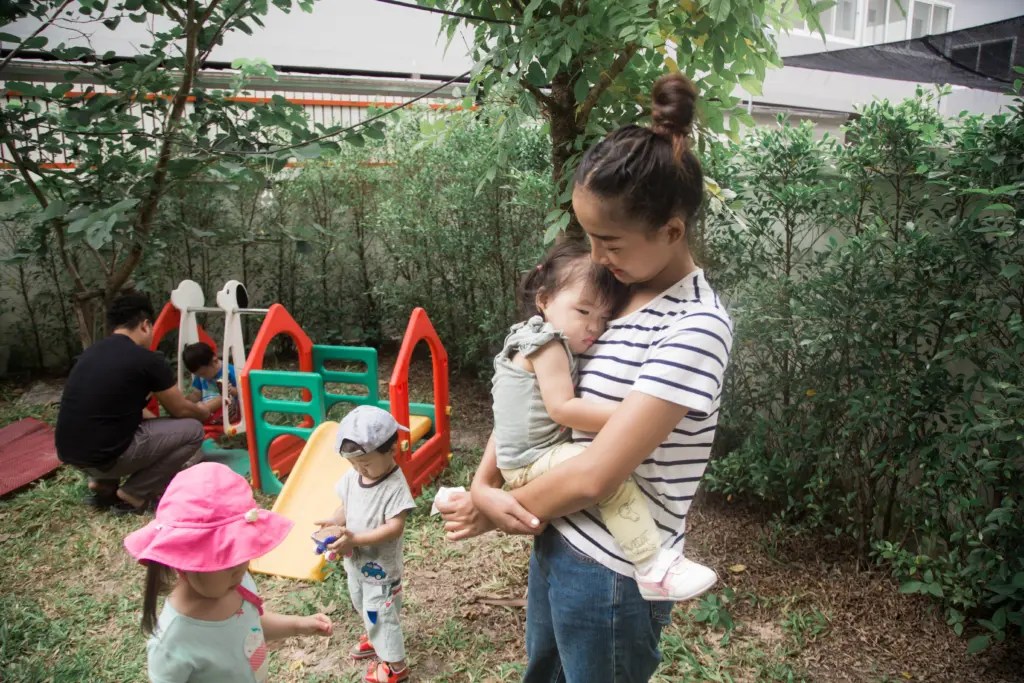
A child care worker holds an infant while other young children play outside.
  • by New Republic

The Cost of Childcare Is About to Explode

"As one home-based provider from Wisconsin reported on a survey from Stanford’s Center on Early Childhood: 'I am continuing to get about $1,800 a month [in stabilization grants].… I have not raised tuition as I use that funding instead.'"

Read the story
  • by TLNT

Supporting moms who care is a win-win for employers and employees

"[S]ince the pandemic (according to Stanford’s RAPID survey), 39% of women with children younger than five said they had either quit their jobs or reduced their hours."

Read the story
  • by Thriving Providers Project

Thriving Providers Project: What We Have Learned So Far

Lessons learned from the first direct cash transfer program in the United States focused exclusively on home-based child care providers.

Read the story
Load more stories