Movement, Executive Functioning, & Learning: Tracking Dance Attention Study
The MEL Dance study uses eye-tracking, video cameras, direct assessments, and parent questionnaires to understand the trajectory of the attention, executive functioning and motor skills of 3-to-4-year-old children in an 8-week dance class.
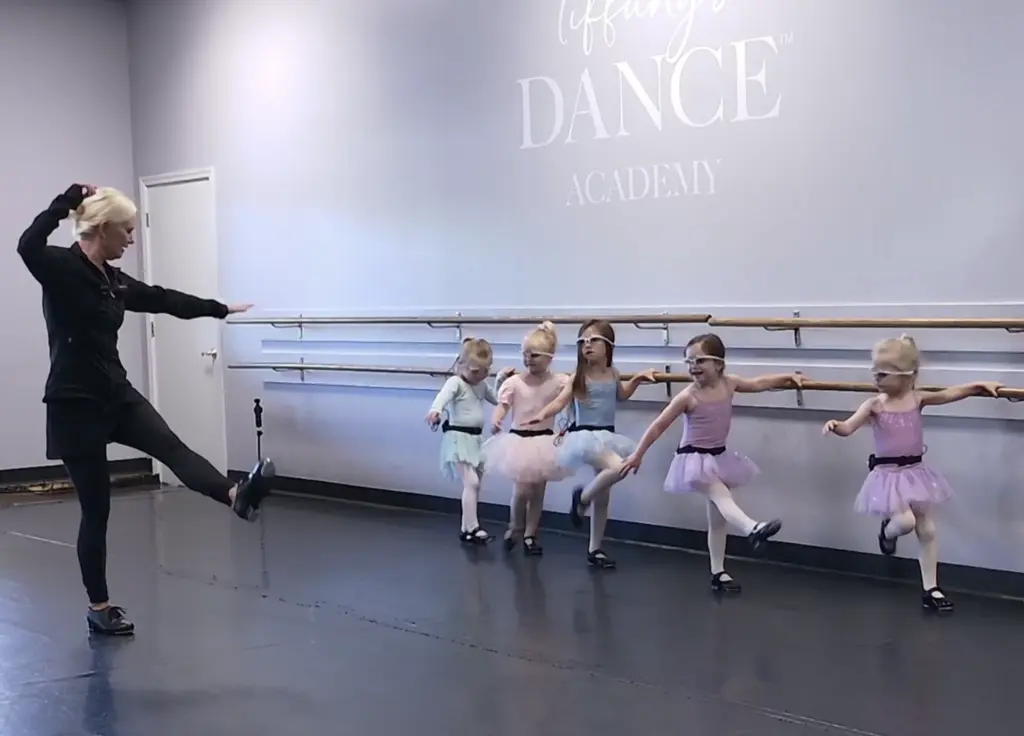
The MEL Dance study is a research collaboration between the Minds, Experiences, and Language (MEL) Lab and Tiffany’s Dance Academy, focusing currently on locations in the East Bay, CA. With its third wave of data collection underway, the study uses eye-tracking, video cameras, direct assessments, and parent questionnaires to understand the trajectory of the attention, executive functioning (e.g., inhibition, working memory, cognitive flexibility), and motor skills of 3-to-4-year-old children in an 8-week dance class.
This study moves us from thinking about learning as an all-or-nothing accomplishment to exploring the mechanisms through which learning occurs over time, and its variability across weeks. The eye-tracking glasses help us to capture the process of learning in real-time in a naturalistic setting and from the point of view of the children themselves!
Principal Investigator
-
 Monica Ellwood-Lowe
Assistant Professor of Education
Stanford Graduate School of Education
View profile
The MEL Dance Study team
-
 Kevin Casillas
Research Coordinator for Monica Ellwood-Lowe
View profile