Recent news

1 / 4

  • by Palabra

‘How can I remain resilient?’: A child care provider urges changes to America’s immigration policies

“The impacts of immigration enforcement on the adults in young children’s lives extend beyond immigrants. This is affecting children, families, and the early care and education workforce,” said Dr. Philip Fisher, Faculty Director of the Stanford Center on Early Childhood. “This is creating conditions that lead the adults who care for children to feel unsafe.”

Read the story


Palabra
  • by K-12 Dive

Want to improve the preschool-to-kindergarten handoff? Strengthen local connections

"[David] Jacobson, in a paper published this fall through the Stanford Center on Early Childhood, said that a child’s years from birth through elementary school 'represent a uniquely important developmental window.'"

Read the story
K12 Dive
  • by The Hechinger Report

Most home-based child care is run by people over 50. Who is going to replace them?

“The aging part of the story, on its own, is not the problem,” said Katharine Sadowski, assistant professor of education at Stanford University’s Graduate School of Education. “But when you combine it with all the other pieces, about the composition of the workforce, of who we’ve relied on, it spells trouble.”

Read the story
Hechinger Report
  • by Thrive

Thrive in Conversation with Joan Lombardi and Sally Brinkman

In a recent Thrive in Conversation webinar, Sally Brinkman, Professor at Adelaide University, and Joan Lombardi, Adjunct Professor at Stanford University, discussed the importance of community participation in early childhood development research and how it benefits children and their families.

Read the story
Thrive

All news & media

Showing 139 stories

The 74
  • by The 74

Chelsea Clinton: Supporting Families Where They Are Matters for Early Childhood

Joan Lombardi, principal advisor at the Stanford Center on Early Childhood, is on the council of Too Small to Fail.

Read the story
EdSurge
  • by EdSurge

Study: Kids Suffer as Nearly Half of U.S. Families Struggle to Meet Basic Needs

"The latest findings from Stanford University’s RAPID survey in partnership with the University of Nebraska Medical Center show that children’s well-being is at risk.

Read the story
Los Angeles Times
  • by Los Angeles Times

Dealing with extreme heat is a full-time job for parents of young kids — and their schools

"Families — across all income levels, races, ethnicities and regions — are increasingly considering how extreme weather conditions affect them."

Read the story
EdSurge
  • by EdSurge

Can the Most Populous State Pull Off Universal Pre-K?

"I’m sure there are those watching closely to see what happens,” says Cristi Carman, director of the RAPID survey project at the Stanford Center on Early Childhood.

Read the story
The 74
  • by The 74

These Early Ed Grants Are ‘Conservative-Friendly.’ Why Does Trump Want To Cut Them?

"Eliminating the grants won’t solve those problems," said Philip Fisher, who directs the Stanford Center on Early Childhood.

Read the story
  • by Monica Arpino

Early Childhood Policy Academy brings together bipartisan elected officials

The academy is designed to highlight the importance of the earliest years as a public investment.

Read the story
  • by Monica Arpino

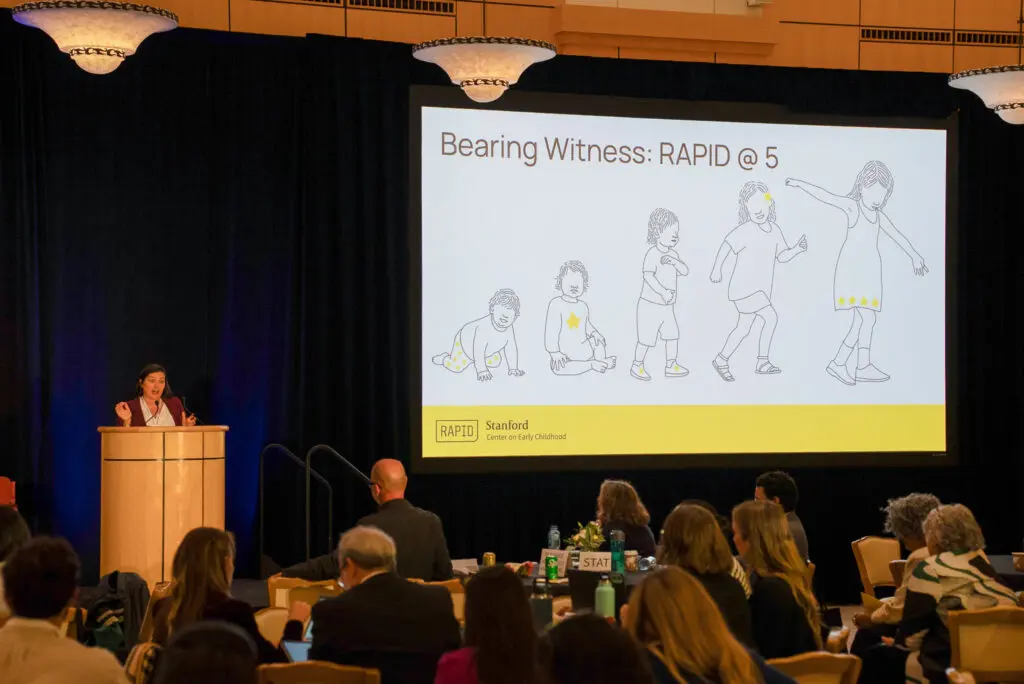
Bearing Witness to Caregivers’ Experiences: 5 Years of the RAPID Survey Project

A one-day convening of RAPID collaborators to reflect, celebrate, and look ahead.

Read the story
EdSurge
  • by EdSurge

Majority of Parents Rely on Friends and Family for Child Care, Report Finds

Trust is top priority, parents told RAPID, when looking for child care. Followed by affordability, availability, location and hours.

Read the story
  • by Isabel Sacks

Turning lived experience into actionable data: Celebrating five years of the RAPID Survey Project

The Stanford project provides essential insights that inform early childhood programs and policies.

Read the story
The Almanac
  • by The Almanac

Experts say federal funding cuts represent threat to families

"We know policy can make a difference," says Stanford researcher.

Read the story
Load more stories